Sleep Support
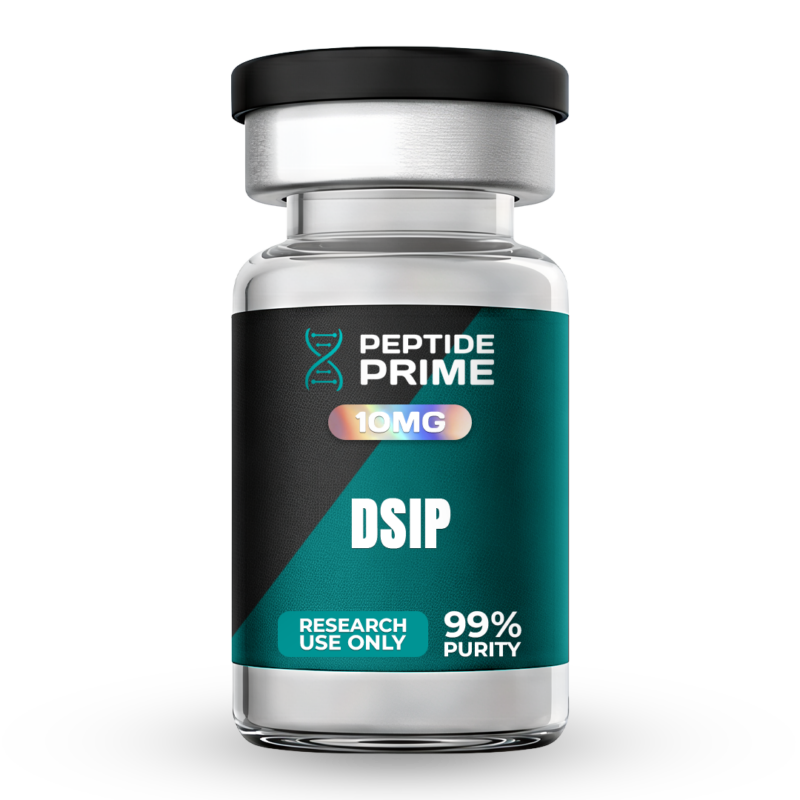
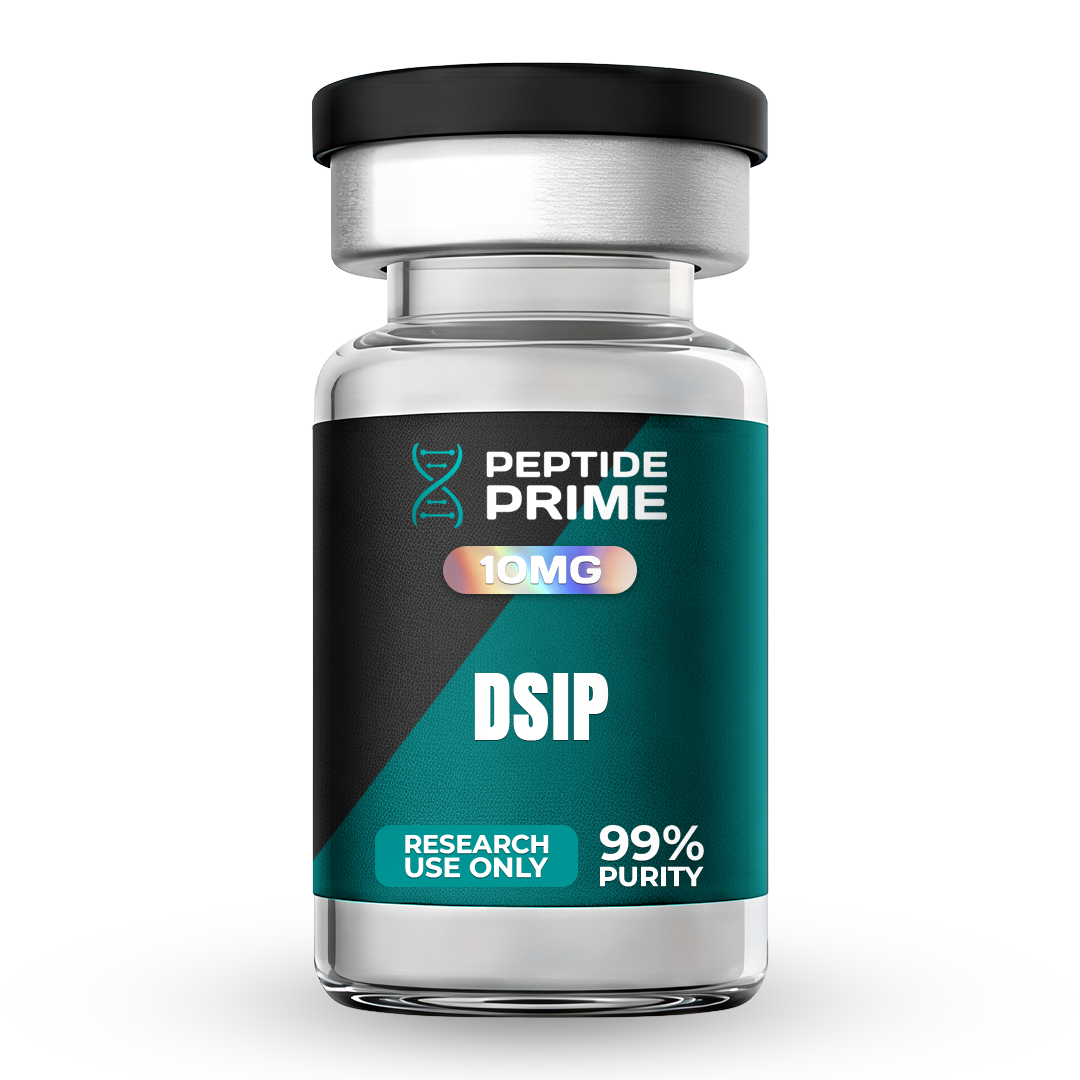
DSIP 10mg
£25.00
Out of stock
DSIP (Delta Sleep-Inducing Peptide) is a naturally occurring neuropeptide associated with sleep regulation, stress response, and neuroendocrine balance. Its biological activity has attracted interest for its potential role in sleep architecture, relaxation, and the body’s natural stress-regulation processes.
>99% Purity
3rd Party Tested
Fast UK Delivery
Secure Payment
>99% Purity
Our peptides are lab-tested for purity and potency, ensuring you get the highest quality every time.
3rd Party Tested
Every batch is independently tested for safety, purity, and accuracy.
Fast UK Delivery
Discreet and reliable delivery across the UK, so you can get your peptides quickly and securely.
Secure Payment
Your information is protected with advanced encryption and trusted payment providers.
DSIP Peptide
Delta Sleep-Inducing Peptide (DSIP) is a naturally occurring neuropeptide originally isolated from the cerebral venous blood of rabbits during research into sleep regulation. It is a short peptide consisting of nine amino acids (a nonapeptide) that has been investigated for its potential role in sleep physiology, stress responses, pain modulation, and neuroendocrine regulation. Unlike conventional sedative-hypnotic compounds, DSIP has been studied primarily for its possible influence on endogenous sleep-regulatory pathways rather than through a well-established, single-receptor mechanism.
Although DSIP has attracted scientific interest for its potential effects on sleep architecture and stress-related physiology, its precise mechanism of action remains incompletely understood. Research has explored its interactions with central nervous system activity, neuroendocrine signaling, and biological responses to stress.
Overview
DSIP represents an area of neuropeptide research focused on the relationship between sleep regulation, stress adaptation, and central nervous system function. Early experimental studies suggested that DSIP might influence sleep-related processes, including the organization of sleep stages and the physiological responses associated with rest. However, findings have been inconsistent, and its name should not be interpreted as proof that it reliably induces sleep.
In experimental models, DSIP has also been investigated for potential effects on the hypothalamic-pituitary-adrenal (HPA) axis, a major component of the body’s stress-response system. Researchers have explored whether the peptide can influence stress-associated hormonal activity, including cortisol regulation, and modify physiological responses to stress. These observations remain preliminary, and the biological pathways responsible for any such effects have not been conclusively established.
Additional areas of investigation include pain modulation, circadian biology, and interactions between the nervous and endocrine systems. Despite these proposed applications, DSIP is not an established treatment for insomnia, anxiety, chronic pain, or other medical conditions, and further controlled research is needed to determine its clinical relevance.
Chemical Makeup
- Peptide Name: Delta Sleep-Inducing Peptide (DSIP)
- Amino Acid Sequence: Trp-Ala-Gly-Gly-Asp-Ala-Ser-Gly-Glu (WAGGDASGE)
- Molecular Formula: C₃₅H₄₈N₁₀O₁₅
- Molecular Weight: Approximately 848.8 g/mol
- Peptide Length: 9 amino acids
- Other Known Titles: DSIP; delta sleep-inducing peptide
- Peptide Classification: Endogenous neuropeptide
Research Studies and Clinical Trials
DSIP and Sleep Regulation
Early animal experiments and subsequent human investigations examined whether DSIP could influence sleep onset, sleep duration, and the distribution of sleep stages. Initial findings suggested possible changes in sleep-related measures under certain experimental conditions. However, subsequent research has not established a consistent, reproducible sleep-promoting effect.
The mechanisms underlying these observations remain uncertain. DSIP has not been conclusively shown to act through a single, well-defined receptor system comparable to the receptor targets of many modern pharmaceutical compounds. Consequently, its potential role in sleep regulation remains a subject of investigation rather than an established therapeutic application.
DSIP and Stress Response
Another area of research concerns DSIP’s potential interaction with physiological stress pathways. Experimental studies have investigated whether the peptide influences hormonal responses associated with stress, including activity involving the hypothalamic-pituitary-adrenal axis.
These investigations have generated hypotheses about a possible role in stress adaptation and neuroendocrine regulation. Nevertheless, the available evidence does not establish that DSIP reliably reduces stress, normalizes cortisol levels, or provides clinically meaningful benefits for stress-related disorders in humans.
DSIP and Pain Modulation
DSIP has also been explored in experimental research involving pain perception and the body’s response to painful stimuli. Some investigations have considered whether it may affect central nervous system processes involved in pain modulation or interact with physiological pathways associated with stress-related pain responses.
However, the evidence is limited, and the mechanisms remain unclear. There is insufficient high-quality clinical evidence to conclude that DSIP is an effective analgesic or a viable alternative to established pain-management treatments.
DSIP and Neuroendocrine Function
Researchers have investigated potential relationships between DSIP and endocrine signaling, including hormonal pathways associated with sleep, stress, and circadian physiology. These studies reflect broader interest in how neuropeptides may coordinate communication between the central nervous system and endocrine organs.
Although experimental observations have suggested possible neuroendocrine effects, the direction, magnitude, and clinical significance of these effects remain uncertain. More rigorous studies are required to determine whether DSIP produces reproducible changes in hormone regulation and whether those changes translate into meaningful health outcomes.
Research Use Only
All products in this site are exclusively intended for laboratory research purposes only.