Cell Vitality
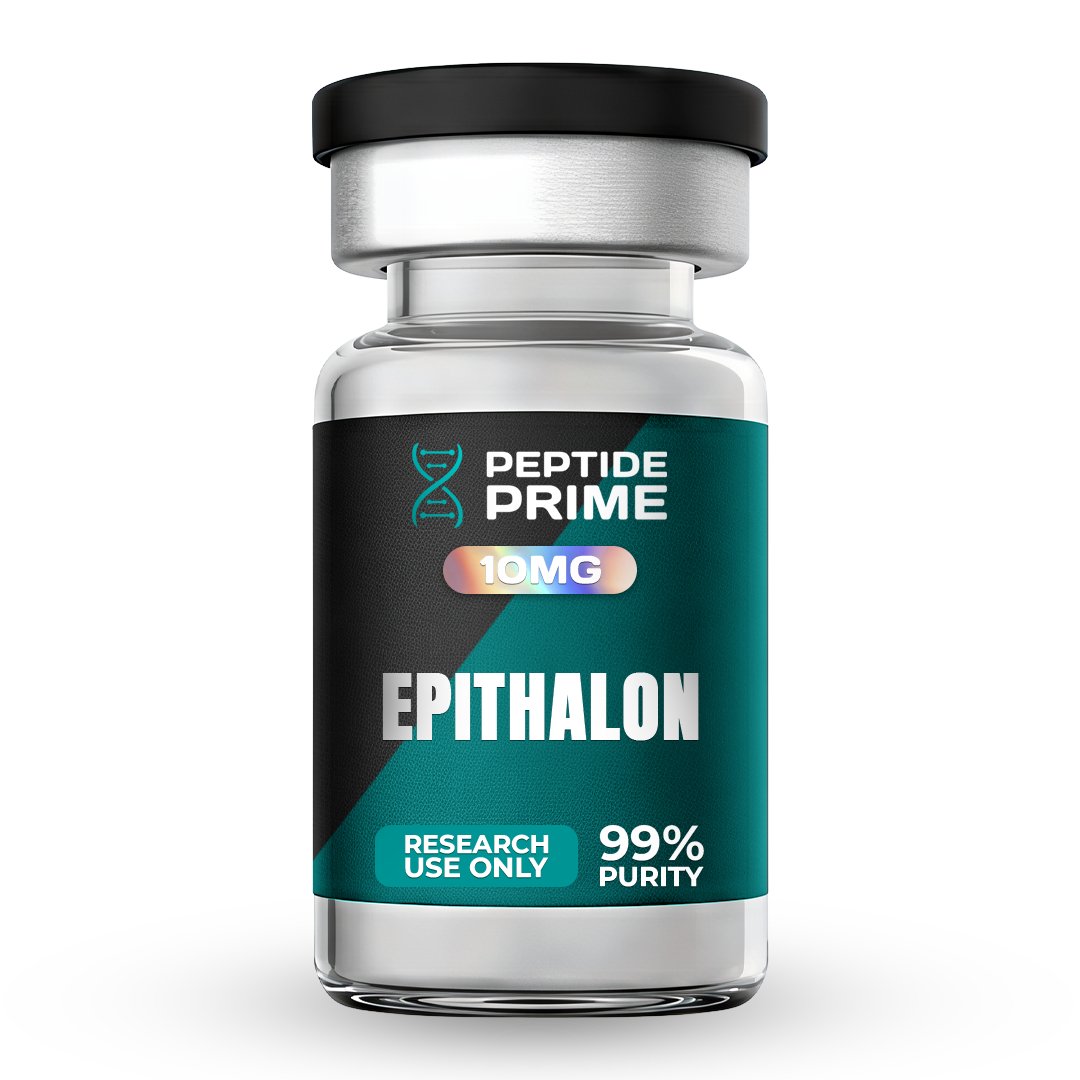
Epithalon 10mg
£14.00
Out of stock
Epithalon is a synthetic tetrapeptide studied for its potential effects on telomerase activity, cellular aging, and circadian rhythm regulation. By potentially influencing telomere maintenance and age-related cellular processes.
>99% Purity
3rd Party Tested
Fast UK Delivery
Secure Payment
>99% Purity
Our peptides are lab-tested for purity and potency, ensuring you get the highest quality every time.
3rd Party Tested
Every batch is independently tested for safety, purity, and accuracy.
Fast UK Delivery
Discreet and reliable delivery across the UK, so you can get your peptides quickly and securely.
Secure Payment
Your information is protected with advanced encryption and trusted payment providers.
Epithalon Peptide
Epithalon (also known as Epitalon or Epithalamin-derived tetrapeptide) is a synthetic tetrapeptide composed of four amino acids: alanine, glutamic acid, aspartic acid, and glycine (Ala-Glu-Asp-Gly). It was developed from research into epithalamin, a peptide preparation associated with the pineal gland, and has been investigated for its potential effects on cellular aging, telomerase activity, and biological rhythms.
Unlike metabolic peptides that target specific hormone receptors, Epithalon has primarily been studied in experimental models investigating aging-related cellular processes. Its proposed mechanisms include modulation of gene expression, possible effects on telomerase activity, and interactions with pathways involved in cellular stress responses. However, many of these mechanisms remain incompletely established, and robust evidence demonstrating meaningful anti-aging benefits in humans is limited.
Overview
Epithalon has attracted research interest because of its proposed relationship with the pineal gland, an endocrine structure involved in regulating circadian rhythms and melatonin secretion. Researchers have investigated whether this short peptide may influence biological processes associated with aging, including cellular longevity, antioxidant defenses, and the regulation of physiological rhythms.
One of the most frequently discussed hypotheses concerns telomerase activity and telomere maintenance. Telomeres are protective DNA sequences at the ends of chromosomes that generally shorten as many types of cells divide. Experimental research has explored whether Epithalon can influence telomerase, the enzyme responsible for maintaining telomeres in certain cellular contexts. Findings from preclinical studies have generated interest, but they do not establish that Epithalon reliably extends human lifespan or prevents age-related disease.
Epithalon has also been investigated for potential effects on gene expression and circadian regulation. Although some experimental and clinical reports have described changes in physiological markers associated with aging, the available evidence is not sufficient to establish its efficacy, long-term safety, or optimal use in humans.
Chemical Makeup
- Peptide Sequence: Ala-Glu-Asp-Gly (alanine–glutamic acid–aspartic acid–glycine)
- Molecular Formula: C₁₄H₂₂N₄O₉
- Molecular Weight: Approximately 390.35 g/mol
- Peptide Length: 4 amino acids
- Other Known Names: Epitalon, Epithalon, AEDG
- Research Classification: Synthetic tetrapeptide investigated in experimental aging and pineal-gland research
Research Studies and Clinical Trials
Epithalon and Telomere Biology
One major area of investigation is the possible relationship between Epithalon and telomere maintenance. Laboratory studies have explored whether the peptide can influence telomerase activity or telomere-related processes in certain cellular systems.
These findings have contributed to interest in Epithalon as a potential tool for studying cellular senescence and longevity-related mechanisms. However, telomere length is only one factor in aging, and changes in telomerase activity do not automatically translate into improved health or longer life. Telomerase regulation is also biologically complex because persistent activation in certain cells can be associated with cancer development. The available evidence does not establish that Epithalon safely extends human lifespan.
Epithalon and Cellular Aging
Experimental research has examined Epithalon in relation to cellular aging, oxidative stress, and age-associated changes in biological function. Some reports suggest that the peptide may affect cellular processes associated with stress responses and the maintenance of normal cell function.
These observations remain preliminary. The strength of the evidence varies by experimental model, and reported findings should not be interpreted as proof of a generalized anti-aging effect in humans. Larger, well-controlled studies are needed to determine whether these laboratory observations have meaningful clinical implications.
Epithalon and Circadian Rhythm Regulation
Because Epithalon originated from research associated with pineal-gland peptides, its potential relationship with circadian biology has also received attention. The pineal gland contributes to the regulation of sleep–wake timing through melatonin secretion, which is influenced by the light–dark cycle.
Research has explored whether Epithalon or related peptide preparations influence physiological rhythms and age-associated changes in their regulation. However, the evidence does not establish Epithalon as an effective treatment for insomnia, circadian rhythm disorders, or other sleep-related conditions.
Epithalon and Longevity Research
Some experimental and clinical reports, particularly those originating from research groups studying pineal peptides and aging, have described possible associations between peptide-based interventions and selected markers of health or longevity. These reports have helped sustain interest in Epithalon as an investigational compound.
Research Use Only
All products in this site are exclusively intended for laboratory research purposes only.